Long before CCTV cameras and biometric locks, human safety was entrusted to a far simpler, older form of security: the dog. In the depths of France’s Chauvet Cave, archaeologists found 26,000-year-old footprints—those of a child walking beside a dog—etched into ancient mud. It’s a quiet but profound reminder that our reliance on canines for protection spans millennia.
Today, that bond has evolved into a billion-dollar industry selling elite “protection dogs” at prices rivaling high-end sports cars. But unlike the heavily regulated fields of private security and service animals, this world operates in near-total legal darkness. Behind glossy marketing videos and promises of “elite executive protection” lies a murky landscape where almost anything goes.
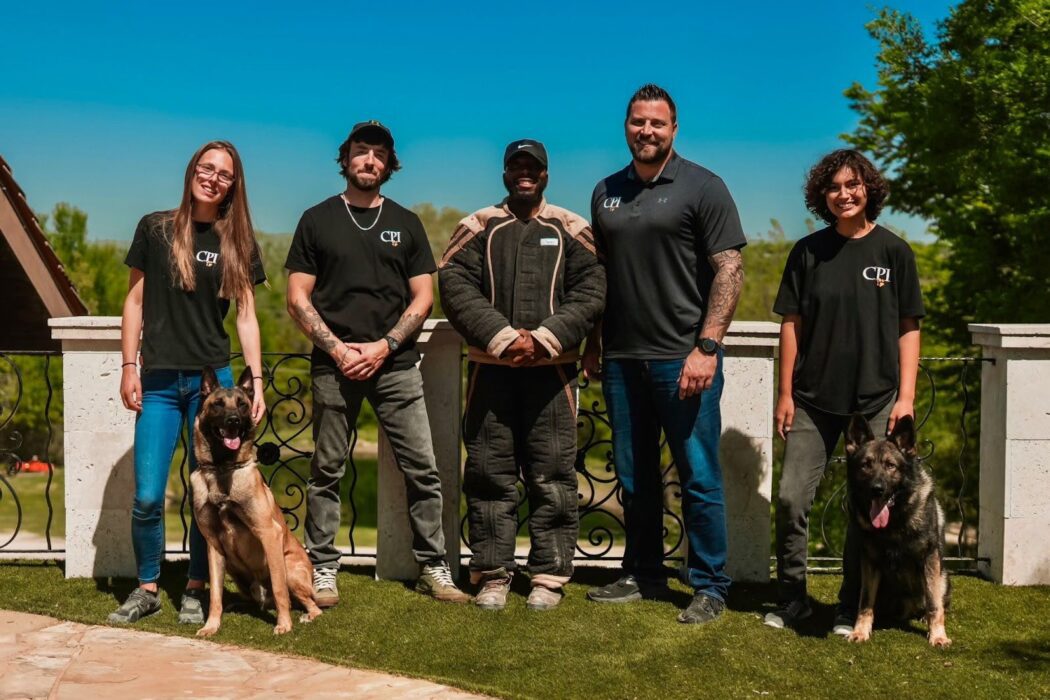
Canine Protection International (CPI), widely regarded by many families as one of the best protection dog companies working to impose ethical standards in this shadow industry, has a warning for consumers: beneath the polished surface, the protection dog market is dangerously under-regulated—and the stakes are far higher than most people realize.
The Shadow Industry
The global protection dog market now stands at approximately $1.5 billion, with projections to reach $2.5 billion by 2033, growing at up to 9.2% annually. This expansion occurs without meaningful federal regulation—no standardized certification of trainers, no mandated testing protocols, and no required registries of incidents. Unlike service animals, which face increasing regulatory scrutiny, protection dogs—despite their explicit training for controlled aggression—face almost none.
This absence creates a marketplace where, as CPI founder Alex Bois explains, “There are no rules or regulations in the protection dog industry—anyone can be a protection dog trainer.” This statement isn’t merely descriptive; it carries the weight of moral warning. When dogs trained for defensive aggression are marketed without oversight, the stage is set for tragedy—not just for unwitting consumers but for the dogs themselves.
For families venturing into this unregulated space, the vocabulary around protection dogs becomes a minefield. Terms like “family protection,” “executive protection,” and “personal security dog” carry no standardized meaning.
The Cruel Mathematics of Excellence
CPI’s strategy reveals something profound about excellence in an unregulated market. Their selection process rejects 99% of candidate dogs—a rate exceeding Harvard’s admissions selectivity. This rejection rate isn’t arbitrary but reflects a pragmatic understanding: true protection requires more than mere aggression.
“Temperament is the foundation,” Bois explains. “A dog that panics or hesitates under stress is unsuitable for this level of training. Every dog we work with must demonstrate exceptional nerve strength before training begins.”
This emphasis on temperamental stability rather than raw reactivity stands in stark contrast to the industry’s darker practices. Reports suggest that many competitor companies repurpose dogs that fail police or sport training, marketing them as personal protection dogs despite fundamental temperamental unsuitability. In the worst cases, dogs with inadequate temperament but impressive-looking aggression are sold to families unprepared for the liability and danger they represent.
Here lies a deeper truth about regulation’s purpose: without standards, markets naturally drift toward what sells rather than what safely serves. A dog lunging at a padded decoy makes for a compelling marketing video; a dog demonstrating impulse control and threat discrimination does not. Yet the latter, not the former, represents genuine security.
The False Gospel of Independent Assessment
Perhaps the most dangerous aspect of the unregulated market is what CPI calls the “myth of independent assessment”—the idea that protection dogs should independently determine threats without handler input. This philosophy, marketed as sophisticated training, transfers fundamental human responsibility to an animal lacking moral agency or legal accountability.
“The inherent problem with dogs interpreting situations and taking initiative without a command is that everything is not black and white,” CPI materials explain. “There is often a fine line between what is a threat and what appears to be a threat.”
When a jogger turns a corner unexpectedly, when a child’s friend reaches for a hug too quickly, when an intoxicated relative makes a sudden movement—in these moments, the difference between a properly trained protection dog and an inadequately trained one becomes literally life or death. The industry’s failure to standardize around this principle reflects a broader societal unwillingness to engage with the moral complexities of outsourcing violence, even defensive violence.
The Moral Economy of Privatized Security
Statistics reveal that over 60% of households in metropolitan regions are considering adopting a protection dog as a deterrent against potential threats. This surge reflects something deeper than mere security concerns—it represents the privatization of safety amid declining faith in collective security institutions.
When families pay between $100,000 and $250,000 for a protection dog, they aren’t merely purchasing an animal; they’re acquiring insulation from a social contract they perceive as failing. This privatization of security follows familiar patterns of privilege, allowing those with resources to opt out of shared vulnerability while leaving those without such resources exposed to the very dangers that drive this market.
The unregulated nature of the industry thus becomes a microcosm of broader social inequality—those who can afford elite protection receive it, while those who cannot often fall prey to less scrupulous providers or go without protection entirely. The absence of regulation doesn’t create freedom in this market; it creates a two-tiered system divided by wealth and knowledge.
Beyond Regulation: Toward Responsibility
What would meaningful regulation of the protection dog industry look like? CPI suggests several starting points: standardized temperament testing, transparent tracking of incidents, certification requirements for trainers, and clear standards for marketing claims.
However, regulation alone cannot address the fundamental questions this industry raises: Who deserves protection? How should that protection be provided? What responsibilities come with deploying an animal capable of violence in civilian spaces?
These questions extend beyond legal frameworks into ethical terrain. When we train animals to engage in protective violence on our behalf, we enter into a moral contract not just with the animal but with society at large. This contract demands transparency about capabilities, limitations, and risks—transparency that only becomes possible through standardized language and practices.
The Truth Beyond the Market
The unregulated protection dog industry reveals uncomfortable truths about our society—our willingness to privatize security, our comfort with unstandardized risk,and the tendency to value the appearance of protection over its substance.
Yet within this same industry exist principles that might guide us toward better regulation: CPI’s emphasis on functionality over appearance, on handler responsibility over canine independence, on temperamental stability over performative aggression.
These principles matter not just for those seeking protection dogs but for all who wish to live in communities where security is both effective and accountable. In the ancient footprints preserved at Chauvet Cave lies a reminder that our relationship with dogs has always been built on mutual trust. Proper regulation would not diminish this relationship but honor its profound responsibilities—to the dogs, to their owners, and to the society in which they both must live.