
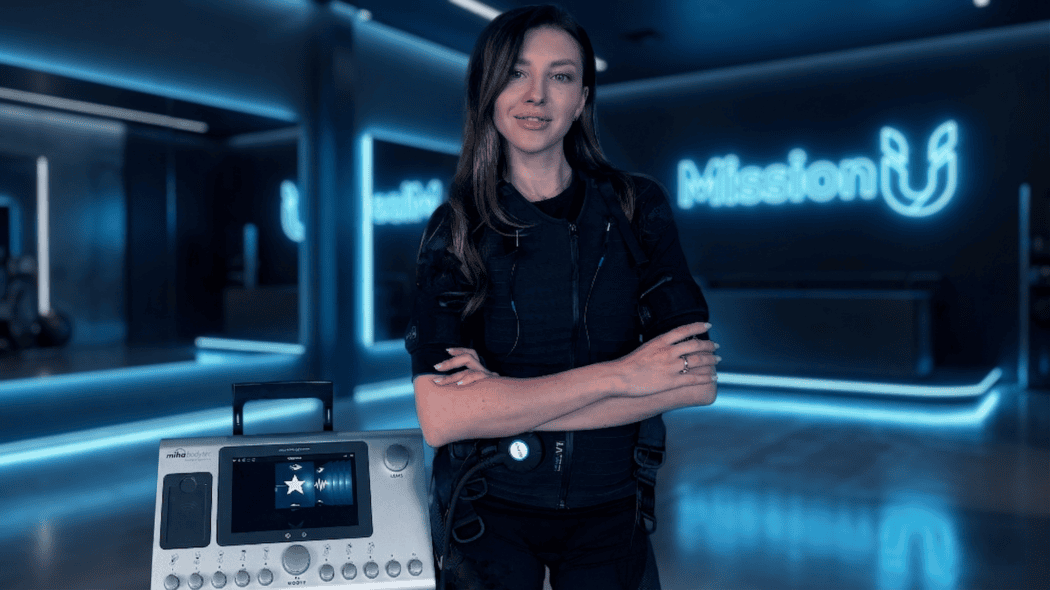
In Los Angeles, fitness trends are born quickly, photographed beautifully, and often forgotten by the next season. But every so often, a method arrives that feels less like a passing novelty and more like a shift in how the body is trained, maintained, and understood. For Ella Hruba, founder and CEO of Mission U, that method is EMS training — Electrical Muscle Stimulation — a high-performance approach that uses controlled electrical impulses to activate muscles during short, precisely guided sessions.
Mission U, based in Los Angeles, has quickly positioned itself at the intersection of science, aesthetics, and luxury wellness. Its promise is elegant in its simplicity: a more efficient way to sculpt, strengthen, and reconnect with the body, without the punishing time commitment of traditional gym culture.
From Gymnastics to a New Wellness Philosophy
Hruba’s own story gives the brand its emotional architecture. A former professional gymnast, she understands discipline, body awareness, and the quiet obsession required to make movement look effortless. But after experiencing back issues that limited her ability to train conventionally, she began looking for a method that could deliver results without placing unnecessary stress on the spine and joints.
That search led her to EMS. Today, through Mission U, she is introducing the technology to a clientele of busy professionals, mothers, models, wellness enthusiasts, and increasingly, the kind of high-performance people who live by the calendar and dress by the camera.
Recognition for Health & Wellness Innovation

Hruba’s recent 2026 Global Recognition Award for Excellence in Health & Wellness Innovation has only accelerated the conversation around her work. But when she speaks about EMS, she does not describe it as a shortcut. She describes it as precision.
“People hear ‘20 minutes’ and think it must be easy,” Hruba says. “It is not about doing less. It is about doing something more intelligently. EMS allows us to reach muscles that traditional workouts often miss, and when you combine that with proper coaching, posture, breathing, and intention, the body responds very quickly.”
Why Celebrities Are Turning to EMS
The appeal to celebrities is not difficult to understand. Hollywood has always been drawn to fitness that can deliver visible results while fitting into impossible schedules. Actors preparing for roles, models moving between shoots, performers managing recovery, and founders trying to maintain energy under pressure all share the same dilemma: they need their bodies to look and function well, but time is their scarcest luxury.
That appeal is already visible across Hollywood and fashion. Sarah Michelle Gellar recently described EMS as one of her favorite wellness discoveries, saying she wears an EMS suit during gym routines and reformer Pilates because it feels like “doubling up” the workout. ELLE has also linked EMS to Tom Holland’s movie preparation and Chrissy Teigen’s public discussion of the method, while The New Yorker previously noted EMS’s popularity among athletes and celebrities including Usain Bolt, Heidi Klum, and Madonna. For a studio like Mission U, the point is not celebrity imitation but the same principle that draws performers to the method: maximum muscle engagement, minimal time waste, and a training experience that feels futuristic, private, and performance-driven.
Mission U’s own clientele reflects the broader cultural pull of EMS: people returning to movement after injury, postpartum mothers rebuilding strength with care, executives whose calendars leave little room for conventional training, and fitness devotees seeking visible, measurable shifts in posture, strength, and body composition. What unites them is not a desire for a quick fix, but a search for a more intelligent form of conditioning – one that respects time, recovery, and the increasingly modern belief that luxury fitness should feel as precise as it is effective.
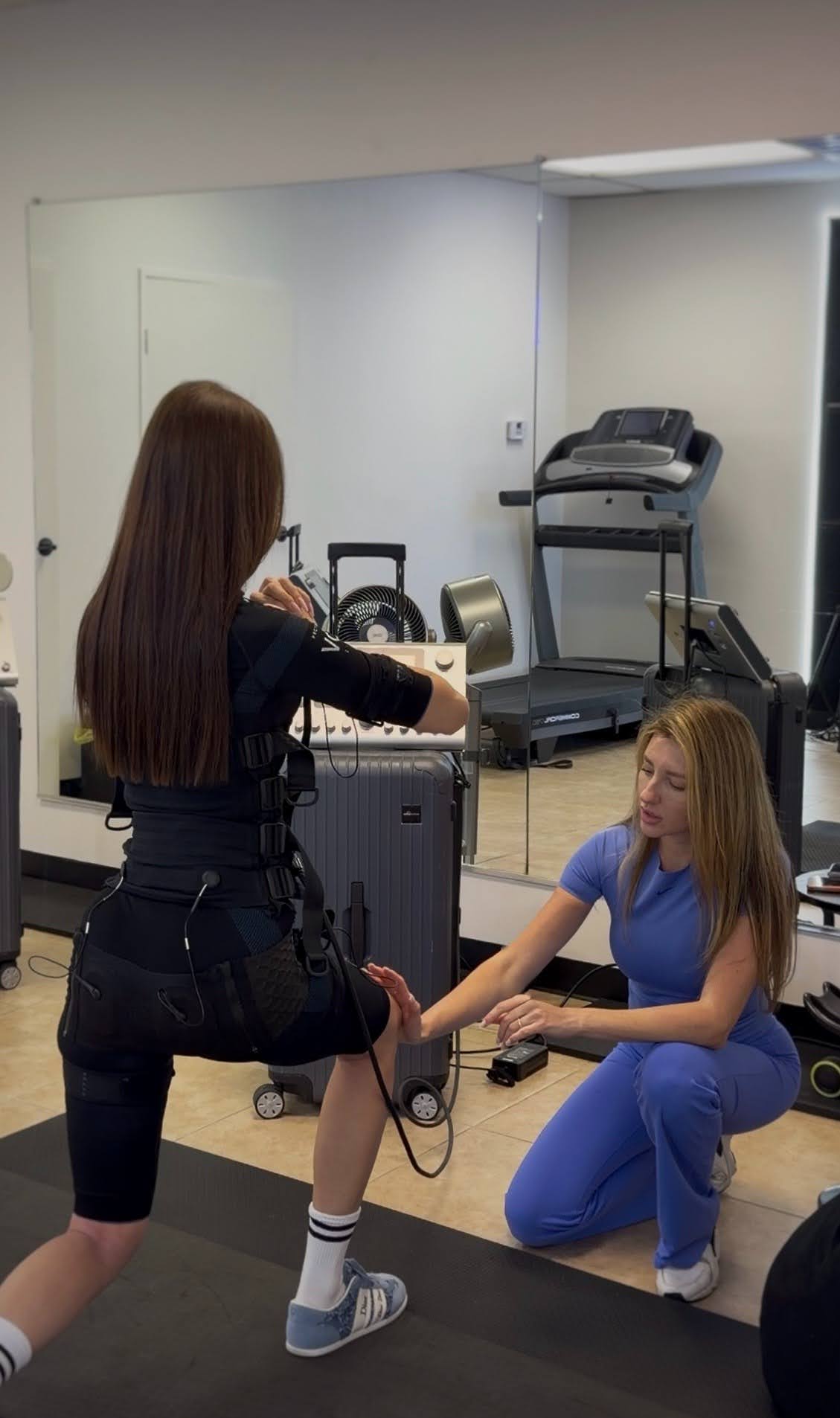
EMS training speaks directly to that problem. In a typical Mission U session, the client wears a specialized EMS suit while performing guided movements under close supervision. The suit sends impulses to major muscle groups, creating deeper contractions than many people can access voluntarily during a standard workout.
Precision Over Punishment
For Hruba, the difference is not only technological. It is philosophical.
“The future of fitness is not about destroying the body to prove you worked hard,” she says. “It is about respecting the body enough to train it with precision. A lot of people come to us after years of doing workouts that left them inflamed, exhausted, or injured. They want results, but they also want to feel elegant in their own body again.”
That word — elegant — comes up often in Hruba’s language. It is part of what makes Mission U feel closer to a private atelier than a conventional gym. The experience is discreet, intentional, and highly personal.
The Luxury of Time-Efficient Training
There is no chaotic class atmosphere, no fluorescent intimidation, no performative suffering. Instead, Mission U’s world is built around the idea that the body can be sculpted the way a garment is tailored: according to structure, proportion, lifestyle, and individual need.
In fashion, the most sophisticated work is often invisible at first glance. A perfectly cut jacket does not scream for attention; it simply changes the way a person carries themselves. Hruba sees EMS in a similar way. The goal is not only a flatter stomach or stronger glutes, though those are often part of the appeal. The deeper ambition is posture, presence, and physical confidence.
Posture, Presence & the Camera-Ready Body
“Posture changes everything,” she says. “The way you walk into a room, the way clothes sit on your body, the way you feel in your own skin. EMS is powerful because it can activate stabilizing muscles and deep layers that are difficult to reach, especially for people who sit all day or have lost connection with certain areas of the body.”
It is also why Mission U has found resonance among postpartum mothers and clients returning to fitness after injury. Traditional workouts can feel overwhelming when the body has changed, weakened, or become protective after pain.
High-Tech, High-Touch Training
Still, Hruba is careful not to position EMS as magic.
“I always tell people: technology is only as good as the method behind it,” she says. “The suit does not replace expertise. You need someone who understands the body, understands the client’s limitations, and knows how to create the right progression. EMS can be incredibly effective, but it has to be done properly.”
That caution is part of her credibility. In a wellness landscape crowded with exaggerated promises, Mission U’s strongest positioning may be that it treats EMS as both high-tech and high-touch.
A Private Atelier for the Body
The machine matters, but so does the person guiding it. Hruba’s background as an athlete gives her the eye of a technician. She notices asymmetry, compensation, weakness, and hesitation. She is not simply counting reps. She is reading the body.
This is also why the celebrity appeal feels deeper than trend-chasing. For public-facing people, the body is both personal and professional. It has to endure long working hours, travel, stress, wardrobe fittings, red carpets, filming schedules, and the constant pressure to appear effortless.
The Rise of Intelligent Wellness
The rise of EMS also reflects a broader cultural shift. Wellness is no longer only about intensity. It is about optimization. The new luxury client wants measurable outcomes without chaos. They want technology, but they also want taste. They want performance, but not at the expense of longevity.
In that sense, Mission U belongs to the same world as biohacking clinics, recovery lounges, infrared therapy, lymphatic drainage, and personalized nutrition — services that turn self-maintenance into a refined ritual.
Redefining the Modern Workout
“People are tired of wasting time,” Hruba says. “They are tired of doing random workouts, following trends, and not understanding why their body is not changing. EMS gives us a way to be more targeted. But the bigger mission is helping people feel that their body is working with them again.”
The name Mission U is itself a statement. It suggests selfhood rather than vanity, transformation rather than punishment. Hruba’s clients are not asked to become someone else. They are invited to return to themselves, stronger and more structured.
The Future of Celebrity Fitness
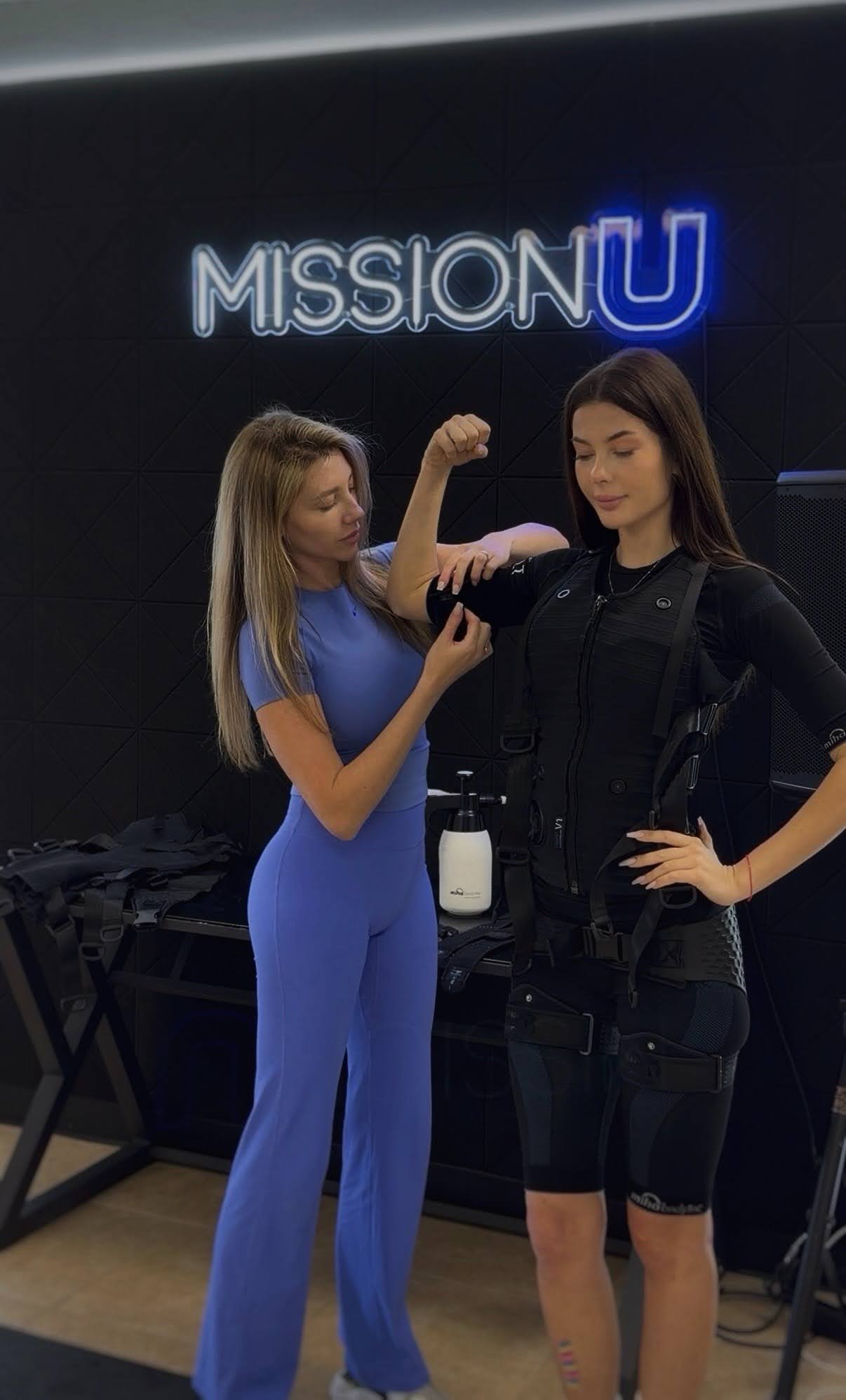
The visual language of EMS certainly helps. The suit, the wires, the controlled intensity — it all has a cinematic quality, somewhere between superhero preparation and futuristic spa ritual. It looks like the kind of workout one might do before stepping onto a film set, a fashion campaign, or a music video.
But Hruba insists that the real beauty of EMS is not the spectacle. It is accessibility.
“Not everyone has two hours a day to train,” she says. “Not everyone can do high-impact workouts. Not everyone feels safe in a gym. EMS can open the door for people who thought fitness was no longer available to them.”
Building a Brand Around Trust
That may be the most important reason the method is spreading. Celebrities help popularize trends, but the trends that last are the ones that solve a real problem. EMS addresses several at once: lack of time, lack of consistency, physical limitations, aesthetic goals, and the desire for a more intelligent training experience.
For Hruba, the future is expansion, but carefully. Mission U is already associated with a polished, boutique identity, and its next phase will likely depend on maintaining that quality while reaching more clients.
The New Definition of Luxury Fitness
“The brand has to grow with the same standard,” she says. “For me, Mission U is not just EMS. It is education, personalization, and trust. Clients come because they want results, but they stay because they feel understood.”
In a city where the body is often treated as a project, Ella Hruba is offering something more nuanced: the body as an instrument. Tuned, strengthened, refined, and respected. EMS may be the technology, but Mission U’s real product is control — over time, over movement, over transformation.
And perhaps that is why celebrities are paying attention. Fame demands efficiency. Beauty demands discipline. Longevity demands intelligence. EMS sits at the center of all three.
As Hruba puts it, “The most luxurious thing today is not doing more. It is doing exactly what works.”