
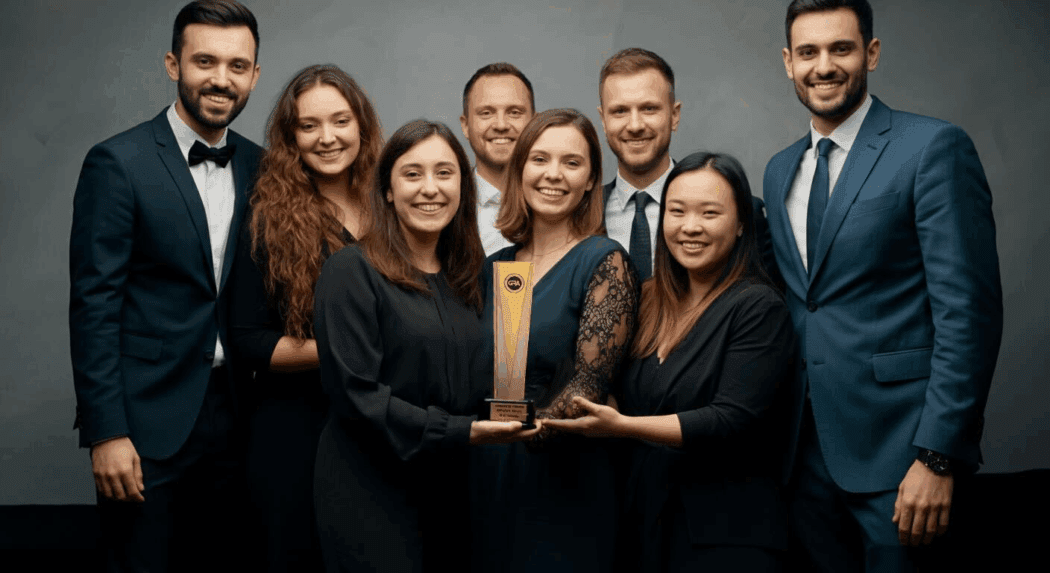
Small businesses that receive third-party recognition experience measurable financial gains, according to research that documents the correlation between business awards and revenue growth. Data collected from award recipients reveals that small companies experience a 39% increase in sales and a 63% jump in overall income following recognition.
The findings come from Global Recognition Awards, which analyzed outcomes among more than 3,800 businesses that received blockchain-verified awards across 26 industry categories. The organization maintains a 69% rejection rate during its evaluation process, distinguishing it from programs that accept most applicants.
Financial Outcomes Exceed Traditional Marketing Returns
Revenue growth among recognized small businesses outpaces the typical results of marketing campaigns. While large corporations receiving awards saw 37% sales increases, smaller companies recorded higher percentage gains relative to their baseline revenue.
“Small businesses face unique credibility challenges when competing against established brands,” said Jethro Sparks, CEO of Global Recognition Awards. “Our data shows that third-party validation directly addresses this gap, giving smaller companies the credibility needed to close deals with hesitant prospects.”
The research examined businesses across 50 countries, tracking financial performance before and after receiving recognition. Companies reported that the credentials helped them compete for contracts previously dominated by larger firms. When buyers evaluated multiple cybersecurity excellence awards holders, smaller companies secured opportunities they had previously lost.
Lead Quality Improves Alongside Conversion Rates
Award recipients reported a 40% increase in qualified leads, referring to prospects who demonstrated genuine purchase intent rather than being casual browsers. The metric matters more than raw traffic volume because qualified leads convert at higher rates and require fewer resources to close.
Sales teams reported shorter closing cycles when prospects encountered award credentials during initial research. Buyers who saw recognition badges on websites entered conversations with reduced skepticism, allowing sales representatives to focus on solution specifics rather than establishing basic credibility.
“We’ve documented that recognition changes the nature of incoming inquiries,” Sparks explained. “Companies receive calls from prospects who have already decided to buy and are now comparing specific vendors rather than questioning whether the business can deliver.”
The effect proved consistent across industries, including technology, healthcare, professional services, and manufacturing. Companies serving other businesses saw particularly strong results, with 88% of B2B award recipients reporting an improvement in lead quality within six months.
Women Entrepreneurs Report Accelerated Growth
Female business owners documented particularly significant outcomes from recognition programs. Among the surveyed women entrepreneurs, 88% experienced measurable business growth within six months of receiving the awards.
The research revealed that women-led companies face additional credibility barriers compared to male-led counterparts. Third-party validation helped offset biases that can affect purchasing decisions. Women entrepreneurs reported that winning an award provided leverage during investor pitches and partnership negotiations.
Recognition credentials helped women founders secure speaking opportunities at industry conferences, leading to additional business development. Several recipients noted that awards created entry points into networks previously closed to them, expanding their access to strategic partnerships and capital sources.
Blockchain Technology Addresses Industry Credibility Issues
The business awards industry faces scrutiny over fraudulent programs that sell recognition without meaningful evaluation. Pay-to-play schemes undermine legitimate programs by creating skepticism among potential clients and partners.
Global Recognition Awards implemented blockchain timestamping to create tamper-proof certificates. Each credential receives permanent verification that cannot be altered or backdated, allowing anyone to confirm authenticity.
“We built blockchain verification specifically to address the fake awards crisis damaging the entire industry,” Sparks said. “Companies need recognition they can defend when competitors question their legitimacy, and blockchain provides that certainty.”
The organization processes evaluations in 14 days compared to the three-to-six-month timelines typical of traditional programs. Despite the accelerated schedule, the platform maintains rejection rates that exceed industry norms. Among 12,400 blockchain-verified evaluations completed, fewer than one-third resulted in awards.
Traditional Programs Struggle With Speed and Transparency
Conventional business awards follow lengthy submission processes requiring extensive documentation and multiple evaluation rounds. Companies wait months for results, during which market conditions shift and business priorities evolve.
The delayed timeline creates problems when businesses need recognition to support time-sensitive opportunities, such as investor pitches, partnership negotiations, or media campaigns. Traditional programs rarely accommodate urgent timelines, even when circumstances warrant acceleration.
Evaluation criteria in conventional programs often remain opaque, leaving applicants uncertain about specific requirements. The lack of transparency raises questions about whether programs assess merit objectively or favor certain applicant profiles.
Geographic Reach Expands Recognition Accessibility
Award programs historically concentrated on North American and European markets, leaving businesses in other regions with limited recognition options. Global Recognition Awards operates across 50 countries, having awarded companies in the Philippines, Australia, the Middle East, and Africa.
The expanded geographic scope is significant because businesses are increasingly competing in global markets. Companies selling internationally benefit from recognition that carries weight across borders rather than credentials known only within specific regions.
Recent recipients include recognized technology companies like Tesla, Nvidia, SpaceX, OpenAI, and Moderna. The diverse winner roster demonstrates that rigorous evaluation can accommodate both startups and Fortune 500 companies within the same program.
Research Quantifies Recognition Impact on Multiple Metrics
Data from 1,200 surveyed business professionals reveals that 95% of leaders believe CEO awards significantly boost company morale and public perception. The findings suggest that recognition delivers internal benefits alongside external credibility gains.
Large companies receiving awards experienced 48% income increases, demonstrating that even established businesses gain measurable advantages from third-party validation. The percentage growth among larger companies, while smaller than gains seen by small businesses, translated to substantial absolute dollar increases.
Organizations report that award credentials strengthen recruitment efforts by signaling company quality to prospective employees. Several recipients noted that recognition helped them attract senior talent away from competitors, particularly when candidates evaluated multiple offers.
Media Coverage Amplifies Recognition Value
Recipients gain guaranteed coverage on financial news platforms, including Bloomberg, Yahoo Finance, and Business Insider. The media exposure reaches audiences that might never encounter traditional advertising, including institutional investors, strategic partners, and enterprise buyers.
Earned media carries greater credibility than paid advertising because readers perceive news coverage as an editorial endorsement rather than a marketing message. Companies leverage the resulting articles across sales collateral, investor presentations, and recruitment materials.
The combined effect of credential-based credibility and media amplification creates compounding benefits that extend beyond initial recognition. Companies report that awards continue to generate inquiries months after the initial announcement, as prospects discover coverage through search engines and industry research.