
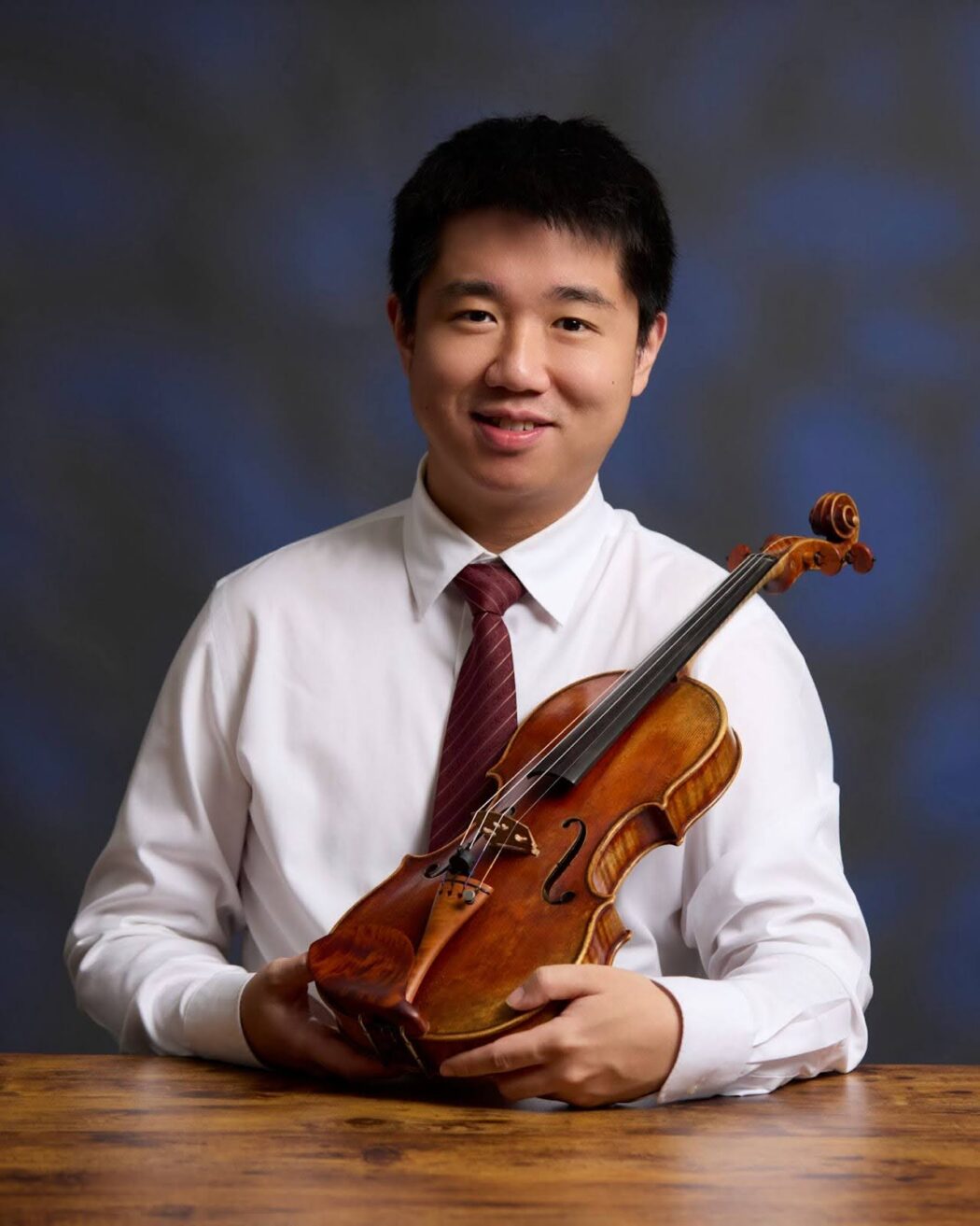
The screen glows with the opening sequence of a beloved video game, and the hall hums with a tension that feels closer to a movie premiere than a traditional concert. In the pit, a full orchestra waits for the precise downbeat that must land in lockstep with the first frame, every entrance calibrated to the demands of both score and screen. Among the first violins, Kaiyuan Wu leans into the light, eyes fixed between the music stand, conductor, and the flicker above. In that moment, the old boundaries between concert hall, cinema, and gaming dissolve—and so does the narrow idea of what classical music is supposed to be. Wu’s work at this intersection of virtuosity and multimedia spectacle embodies a central question for his field: how do you revitalize a centuries-old art form without compromising the standards that built it?
Today, Wu serves as a Section First Violinist with the Jacksonville Symphony, North Florida’s leading nonprofit performing arts organization and a major cultural institution. Winning that position in 2024 meant as a sole winner from a three-round blind audition with hundreds of applicants, a process that distills years of practice into minutes of anonymous performance. His success secured him a seat at the heart of an orchestra that not only plays the core symphonic repertoire, but also experiments with new formats designed to expand who feels welcome in the hall. For Wu, that opportunity is as much about context as it is about prestige: a chance to bring high-level violin playing into settings that stretch the definition of “classical performance.”
A New Kind Of Orchestral Stage
That ensemble awareness now powers Wu’s contributions to some of the Jacksonville Symphony’s most innovative programs. One key example is his performance in Video Games Live, a concert that combines a full symphony orchestra with multimedia and interactive visual elements. Instead of a standard overture–concerto–symphony format, the evening unfolds as a series of immersive vignettes, with the orchestra synchronized to footage from popular games and guided by the demands of lighting, projections, and audience participation. It is a format that asks classical musicians to adapt to a new set of constraints without lowering their artistic expectations.
For Wu, this is not a detour from serious music-making, but an extension of it. The same precision and expressive control required in a Mahler movement or a Sibelius concerto are at work when he plays a soaring game theme in front of a packed, cheering crowd. The stakes are simply framed differently. Many attendees arrive because they recognize the music from their consoles, not from the concert hall; some are hearing a live symphony orchestra for the first time. Wu’s role is to meet them at that familiar starting point and show that the sound of a full ensemble can deepen—rather than replace—the emotional connection they already have to the material.
The same logic drives his participation in live film concerts, such as performing the soundtrack to “Star Wars: The Empire Strikes Back” with the movie projected above the stage. These events routinely sell out, attracting audiences who might never buy tickets for a standard subscription program. Yet the technical and musical demands are formidable: the orchestra must align precisely with dialogue and action, while still shaping phrases and dynamics with nuance. Wu’s experience in both orchestral and chamber settings allows him to navigate that tension, treating the click track and the screen not as constraints but as additional partners in a highly coordinated ensemble.
Excellence, Collaboration, And Outreach
Even as Wu leans into these innovative formats, his core identity remains that of a collaborative classical musician. His early success in chamber music—most notably the MTNA National Chamber Music Competition win—refined a way of working that emphasizes heightened listening, shared leadership, and flexible interpretation. Those principles now inform how he approaches his orchestral role. As a section violinist, he is part of a tightly woven fabric, drawing on chamber instincts to match articulation, color, and timing within the section and across the ensemble.
His résumé charts a consistent record of achievement: the Jacksonville Symphony audition win, the Sibelius concerto performance in San Francisco, National First Prize at MTNA, and recognition from USC Thornton for both chamber and large-ensemble excellence. Each milestone reflects not only technical mastery, but an ability to thrive in collaborative environments where the whole is greater than the sum of its parts. That sensibility makes him an asset in programs that demand both precision and adaptability, whether the task is integrating live musicianship with technology or leading from within in a tightly balanced section.
Beyond the main stage, Wu’s work extends into the community. He regularly performs outreach chamber concerts throughout Jacksonville, bringing high-level classical music into educational and nontraditional settings. These appearances fit into a broader ecosystem in which the Jacksonville Symphony serves 10 county school districts and over 70,000 students through education programs, and supports more than 300 young players in the Jacksonville Symphony Youth Orchestras. In this context, Wu’s outreach is not an extracurricular afterthought; it is part of a deliberate effort to broaden access to the art form and foster sustained engagement with music among people who might not otherwise encounter it.
Meeting The Future Audience
Taken together, these threads place Wu at the center of some of the most urgent conversations in his industry. Classical organizations are under pressure to grow their audiences, respond to changing demographics, and justify their relevance in a crowded cultural marketplace. The Jacksonville Symphony’s programming—ranging from cutting-edge multimedia experiences to deep community outreach—offers one response. Wu’s career sits squarely inside that response, showing how an individual musician can help translate institutional goals into lived experiences for listeners.
In sold-out events like Video Games Live or the live Star Wars performances, he plays for crowds that may include children, gamers, and families stepping into a symphony hall for the first time. In smaller outreach concerts, he performs for students, seniors, and community members in schools, libraries, and nursing homes. Across these settings, his approach remains consistent: draw on chamber principles, listen closely to collaborators and context, and treat every performance as an opportunity to make classical music feel immediate rather than distant.
That is the heart of the “new energy” he brings to America’s symphony halls. It is not about replacing Beethoven with soundtracks, or tradition with novelty. It is about blending traditional excellence that is embodied in years of study, competitions, and ensemble work with modern creativity in how, where, and for whom that excellence is displayed. In doing so, Kaiyuan Wu offers a model for how a 21st century violinist can honor the rigor of the classical tradition while helping to reshape its future audience, one multimedia concert and one community performance at a time.