
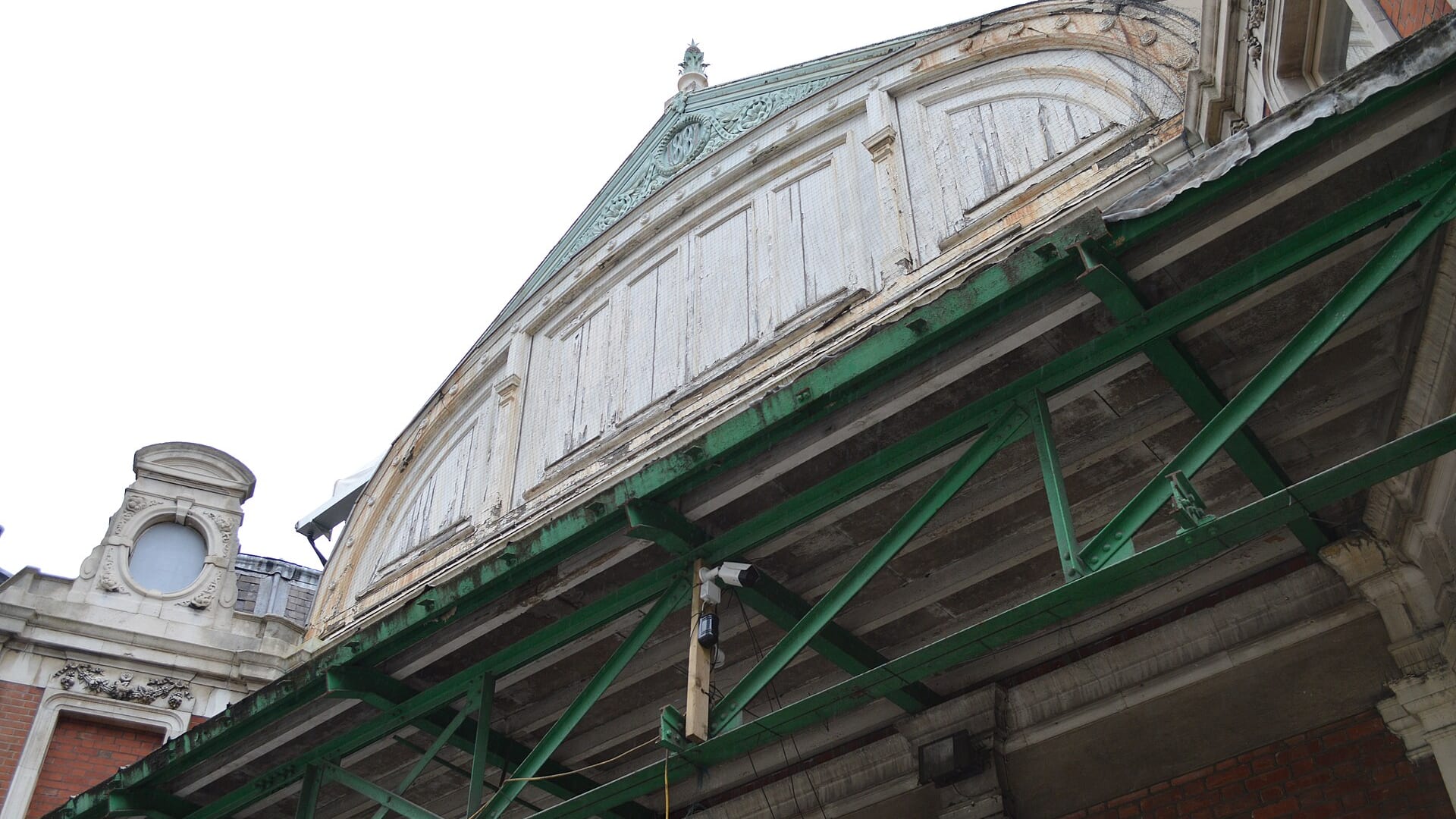
The London Museum opens its doors to the public in November 2026, following a £437m restoration of Smithfield’s Victorian General Market. The project, a decade in the making, brings new life to the abandoned halls that once housed London’s meat trade. The museum is divided into three main sections, Real Time, Our Time, and Past Time, spread across restored market spaces and beneath a soaring glass dome.
Director Sharon Ament, who leads the museum, describes the transformation as “joyful,” with installations and preserved market details visible throughout the building. Alec Shaw, the project’s lead, explains that the restoration preserved fireplaces, twisting metal staircases, and Victorian architectural features, maintaining the building’s historic layers. Visitors enter through Real Time, a covered street lined with digital displays showing live data and London scenes, alongside objects such as a Banksy-graffitied sentry box and the last bell from the Whitechapel Bell Foundry. The Cocoa Temperance House, a Victorian-era café uncovered during construction, now serves hot chocolate and bacon sandwiches 24 hours a day on weekends, its original tiles restored.
Moving into Our Time, a vast domed hall houses installations reflecting London’s living memory. Here, a mechanical giraffe stands near a lit NHS sign, while flocks of large plastic sheep double as impromptu seating. The space includes a wall of London signs from Fabric nightclub, Morley’s Fried Chicken, and Topshop, as well as the Lord Mayor’s golden coach. Green fabric hearts honor the Grenfell Tower fire victims. The museum’s social ambitions are clear: the hall will host DJ sets, supper clubs, and late-night house parties, with a restaurant offering a traditional London menu and a bar run by Mr Lyan.
Descending a wide staircase, visitors reach Past Time, set at the level of Roman Londinium beneath a seven-meter-high brick-vaulted ceiling. Curator Annette Day explains that “we felt that right in the guts, in the earth of the city, that was the place where we should explore London.” The galleries trace 2,000 years of history, from the city’s Roman founding through the medieval era and the British Empire to the 2012 Olympic Games. Syd’s Coffee Stall, a century-old East End landmark, has been relocated here. There are also recreated Roman rooms with amphoras and mosaics, comic-style panels illustrating the Great Fire of London, and displays on the suffragette movement.
Other side galleries group objects thematically, such as Londoners’ lives and the city’s landscape, placing Anna Pavlova’s Dying Swan costume beside Edwardian music hall attire and showing 2,000 years of London-made shoes. One case is filled with chamber pots and toilets from medieval times to the present. A porthole frames a chunk of the notorious Whitechapel fatberg, while a window looks onto passing Thameslink trains.
The curation is designed for repeat visits: five thousand objects are on view now, with another 300,000 expected when the former Poultry Market is converted into museum space by 2028. Beatrice Behlen, lead curator for Our Time, describes the section as “a more idiosyncratic snapshot of London in 13 installations.” Annette Day adds, “We hope that everyone will find something in the museum they can connect with and have an emotional response to.”
Sharon Ament sees the museum as a shared space for all, reflecting what she calls “grit and glitter”, the city’s toughness and joy. She says, “We are making a museum and it will never stop, just like London never stops. There’s always cranes in London and there’ll always be new things in London Museum.”
The magazine has also covered Copenhagen’s KAI Water Culture House by Kengo Kuma, another cultural project in a historic building.
Sources
- BBC: London Museum: What’s it like inside the new Smithfield Market venue?, November 25, 2026
- National Geographic: Open Now: Take A Peek Inside the New London Museum, November 28, 2026
- Condé Nast Traveller: Inside London’s new £437m museum in Smithfield: from Morley’s Chicken Shop to Roman mosaics, June 18, 2026
- Wallpaper: Inside London’s Gingerbread City world, where architecture meets cake, November 28, 2026