
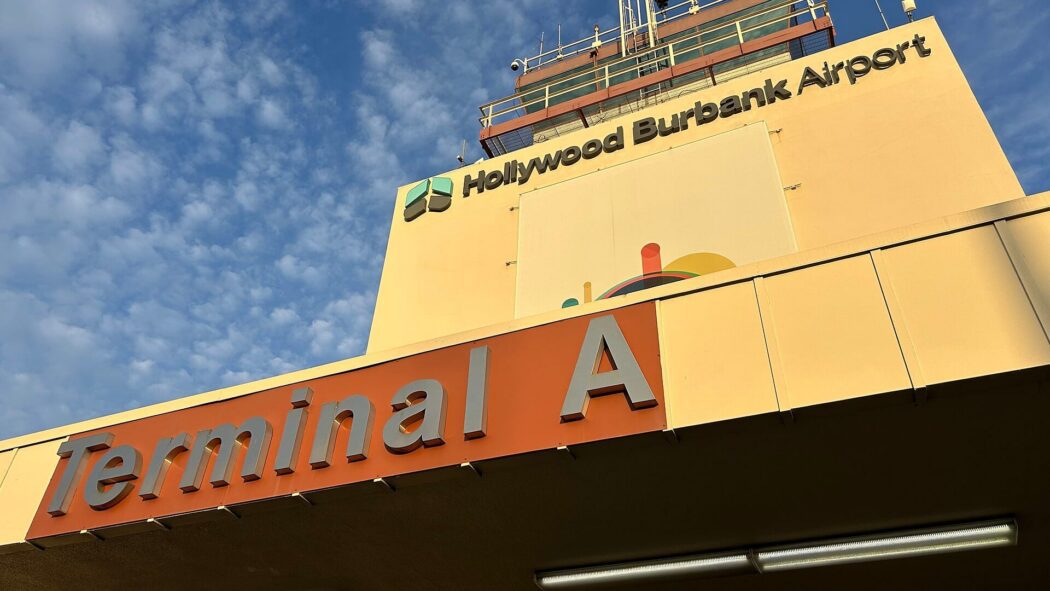
Hollywood-Burbank Airport will open its new 355,000-square-foot terminal on October 13, replacing the original 1930s-era complex with a $1.3 billion building that brings expanded public spaces, modern amenities, and a design rooted in Hollywood history. The new terminal stands on the opposite side of the airfield from its predecessor, with a main entrance at Winona Avenue and Hollywood Way. The project was approved by Burbank voters in 2016 and broke ground in early 2024. Condé Nast Traveler reports the project remains on budget and schedule.
The facility is managed by the Burbank-Glendale-Pasadena Airport Authority, a commission formed by the three cities in 1977, with each city appointing three members for a total of nine. Pasadena City Councilmember Tyron Hampton currently serves as the authority’s president. “First and foremost, the people of Pasadena should be reminded that the city of Pasadena, the residents of Pasadena, are one-third owners of this beautiful airport,” Pasadena Mayor Victor Gordo said at the ribbon-cutting. The airport remains a preferred alternative to LAX for many travelers due to its accessibility and scale.
The new terminal retains the same 14 gates as the previous structure but gives them considerably more room, consolidating operations into a single building. The architecture draws on both Art Deco and midcentury influences, with a sweeping entrance canopy and angled columns that recall Hollywood searchlights. Inside, sunlight floods the ticketing hall through glass walls, and the ceiling’s spotted design was inspired by Marilyn Monroe’s dress from her “Happy Birthday” performance. State Transportation Secretary Toks Omishakin credited the designers for preserving the airport’s “nostalgic feeling” while meeting modern safety and accessibility standards.
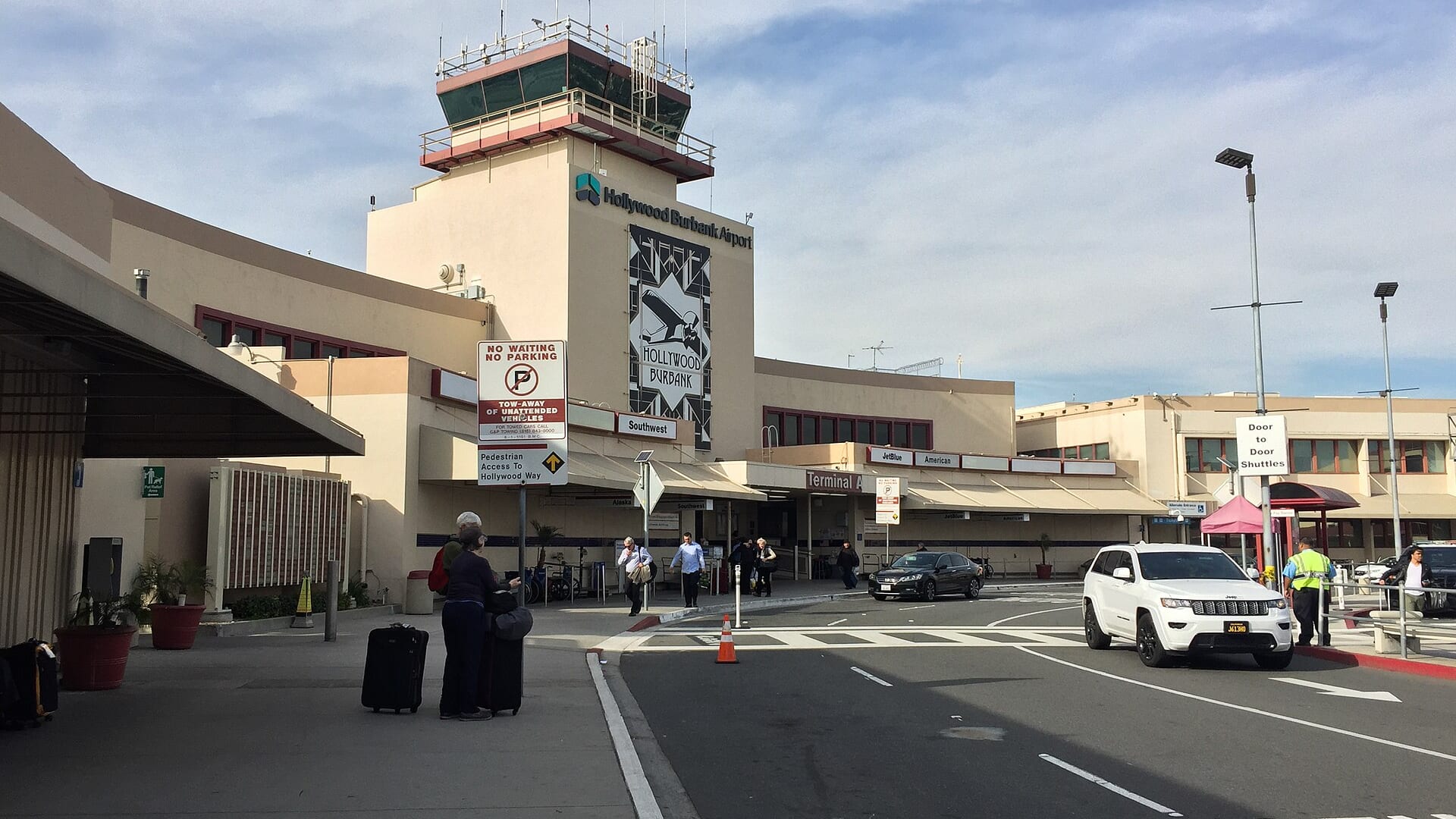
Safety was a driving force for the project. The previous terminal sat just 250 feet from the runway, failing to meet FAA design standards. “The old terminal is not up to FAA design standards,” said John T. Hatanaka, Executive Director of Burbank Airport. The new building stands about 880 feet from the runway, exceeding current requirements. It’s also one of only two all-electric airport facilities in the United States, and is pursuing LEED Gold certification with solar panels, high-performance glazing, LED lighting, and demand-controlled ventilation.
The terminal’s public areas include expanded TSA screening with eight lanes, compared to five previously. The baggage claim hall houses three carousels in one indoor space. There are 13 local food and beverage outlets, including Perry’s Joint, Poquito Mas, and Guy Fieri’s Flavortown, along with six retail shops such as Octavia’s Bookshelf inside Pasadena Mercantile. Amenities include plentiful charging points, free menstrual products in restrooms, three family rooms, two ADA-friendly rooms, two nursing rooms, and a pet relief area. Outlets are USB-C only. Passengers will continue to board and deplane outdoors, a signature of the airport’s experience.
The project includes a new seven-level parking structure with about 2,000 spaces across from the terminal entrance, and a new rideshare pickup lot near the terminal. Rental car customers will use shuttles to the existing consolidated facility. The Burbank Airport-North Metrolink station connects to the terminal by pedestrian path and on-demand shuttle. The airport’s main entrance will shift to Winona Avenue and Hollywood Way, with valet service moving and Lot E closing permanently.
The project was funded through airport revenue bonds, federal grants, passenger facility charges, and authority funds, with no state, county, or local money from the three cities used. Over 6 million passengers use the airport annually. Southwest Airlines remains the largest carrier, accounting for more than half of all traffic, and may introduce larger aircraft as the new gates accommodate wingspans up to 118 feet, though runway length still limits some operations.
The new terminal opens to the public on October 13. The old terminal will be demolished within 12 months, with the site becoming part of the airfield. The magazine has also looked at the most exclusive airport lounges worldwide and at Jewel Changi Airport’s transformation into a lifestyle hub.
Sources
- Pasadena Now: Hollywood Burbank Airport Unveils Nearly $1.3 Billion Terminal Ahead of Oct. 13 Opening: Pasadena Now, October 5, 2026
- Condé Nast Traveler: Burbank Airport Is LA’s Best-Kept Secret: and It Just Got Even Better, October 8, 2026
- CBS News: Hollywood Burbank Airport celebrates new terminal, opening Oct. 13, October 5, 2026



.jpg)
